


You already know
what you like.Stop describing it.
Ahea shows you one garment at a time and learns from every swipe — not only what you like, but which things you like together. Real pieces from independent labels, linked straight to the brand.
Free. No ads. Nothing to sign up to before you can look.
One at a time.No search box, no homework.
A search box asks you to name what you want before you’ve seen it. Ahea does the opposite — it shows, you react, and it reads the pattern in what you keep.
Swipe to teach
Right to keep, left to pass. Both directions move your feed — and neither quietly fills a list you’ll never open.
Undo is honest
Change your mind and undo takes back exactly what the last swipe added. Nothing lingers in the model.
Straight to the label
Every piece links to the brand’s own page, in their currency. Ahea holds no stock and takes no payment.


Every image on this page is a real listing from a real independent label. Nothing here is stock photography.
Five screens, no homework.
Most shopping apps ask you to know what you want before you arrive — a search box, a category tree, forty filters. Ahea assumes the opposite: you know it when you see it.
Swipe on real garments
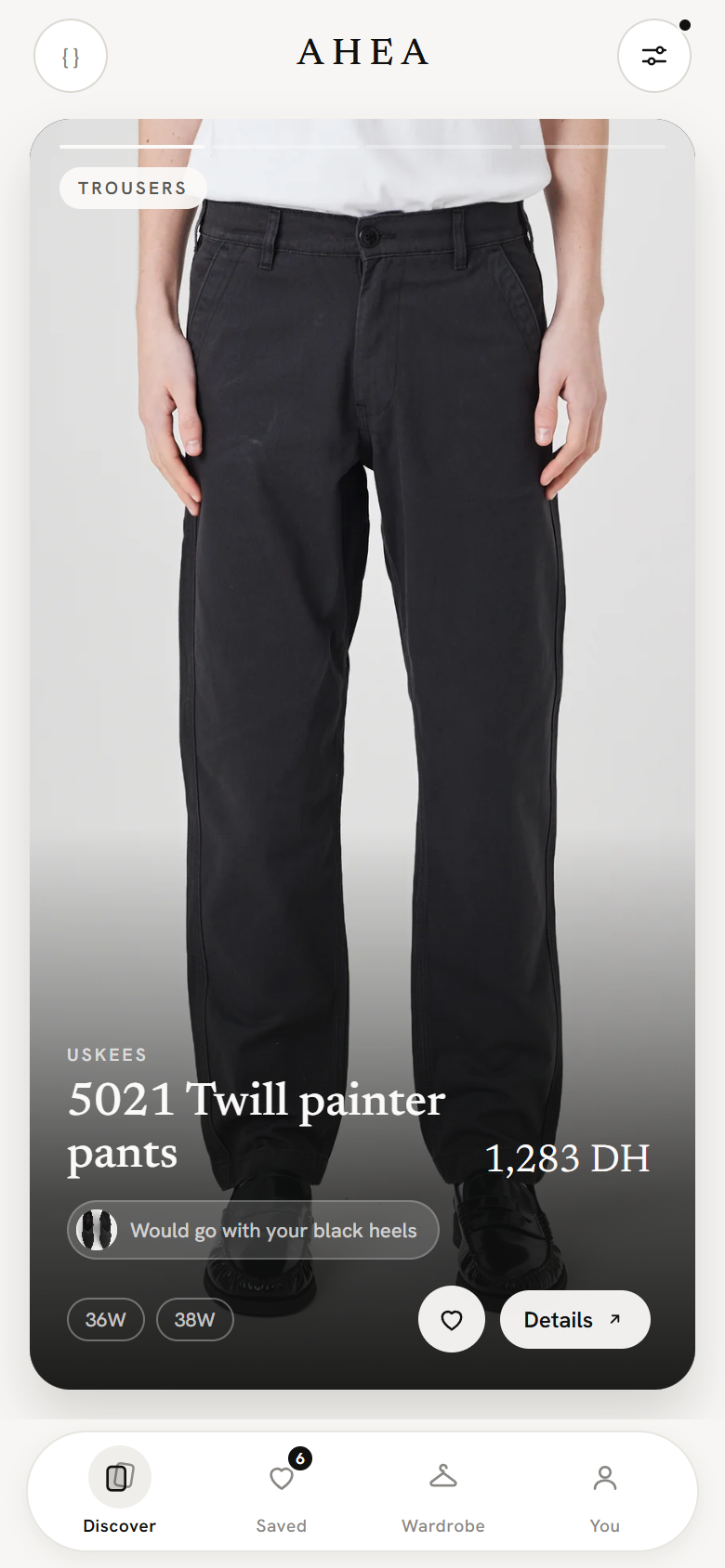
Full-bleed photography from the brand’s own listing, one piece at a time. Right if you’d wear it, left if you wouldn’t — and both directions teach.
Ask it why
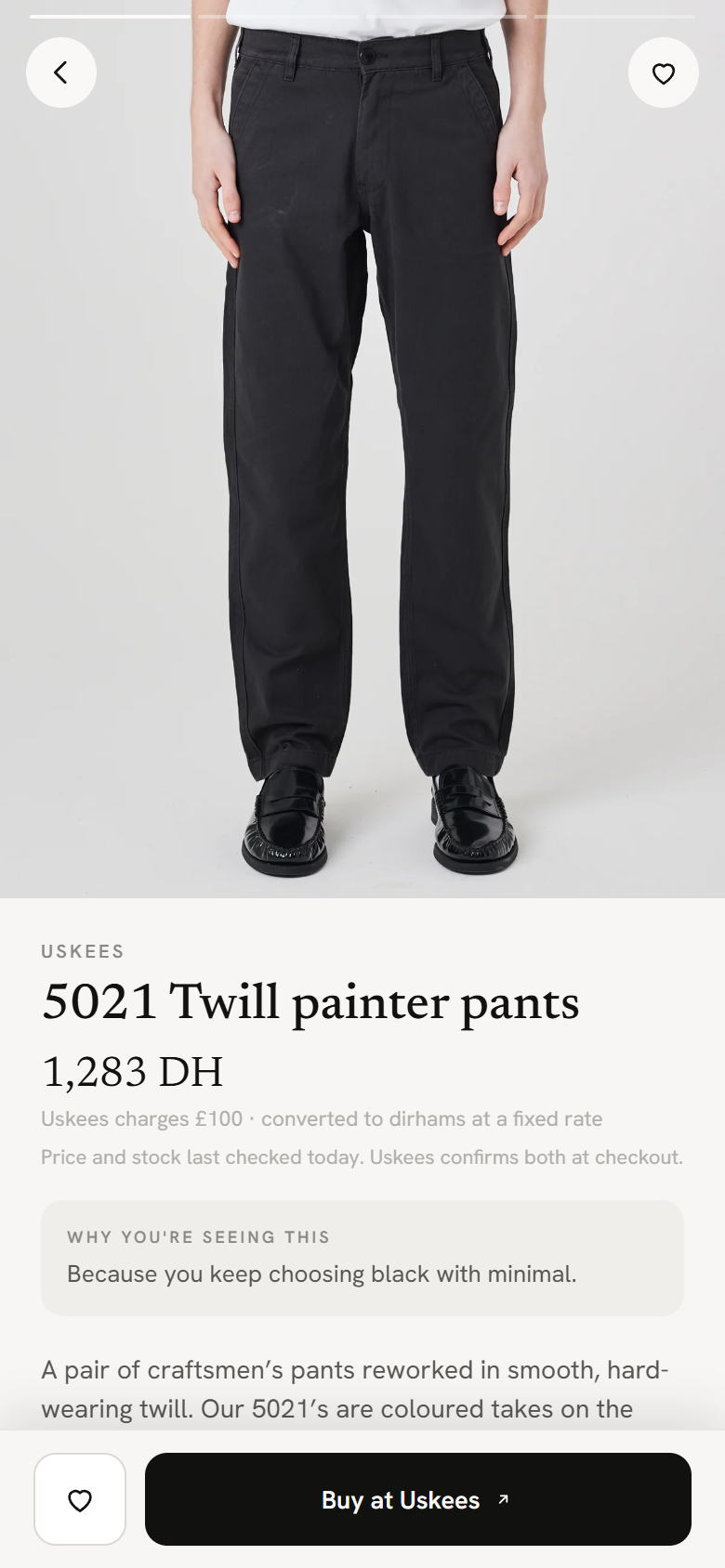
Every piece tells you which of your habits put it in front of you, in plain words. Sizes, the full gallery, and a link straight to the brand.
Saving is its own action
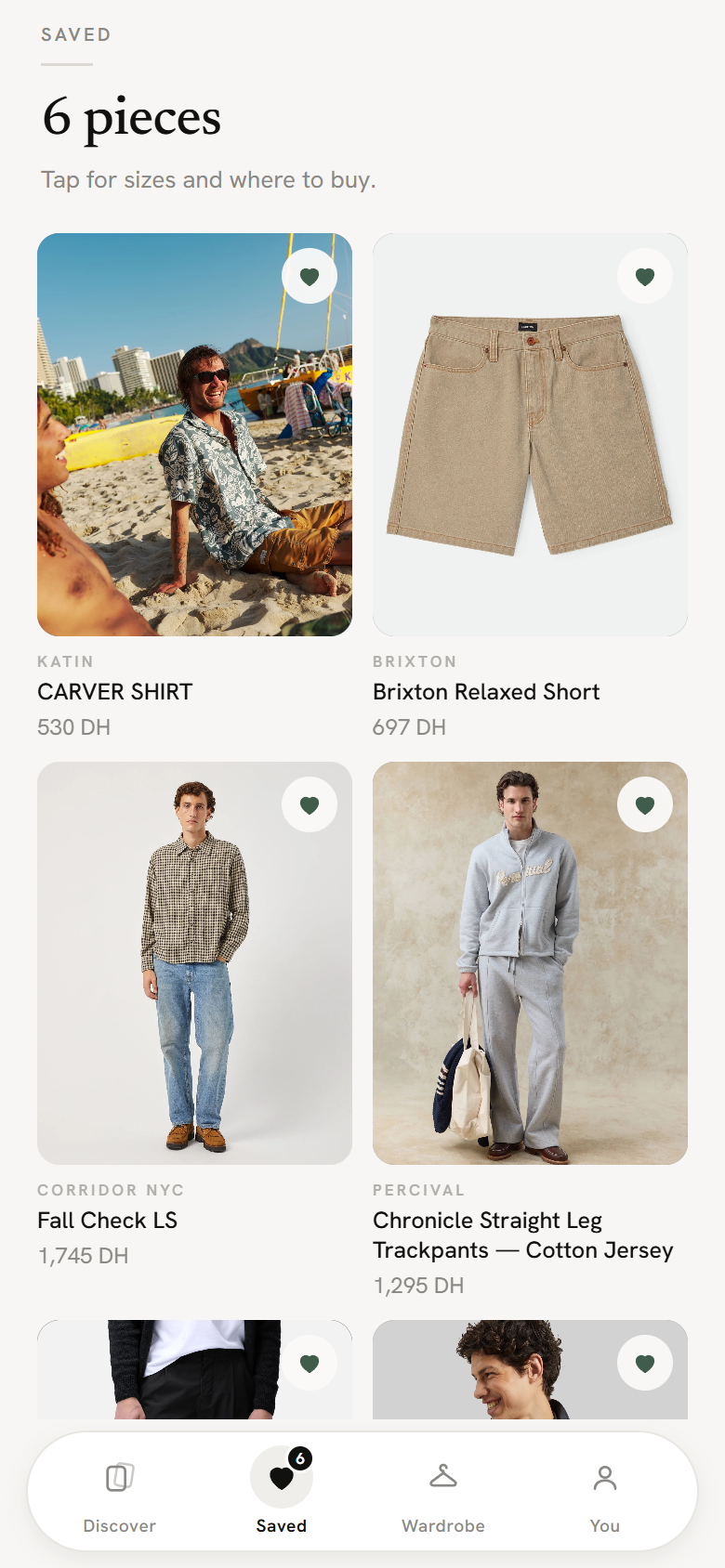
A right swipe is taste signal, not a bookmark. Saved is only ever written by the save button — so it stays a shortlist instead of a landfill.
Watch the profile build
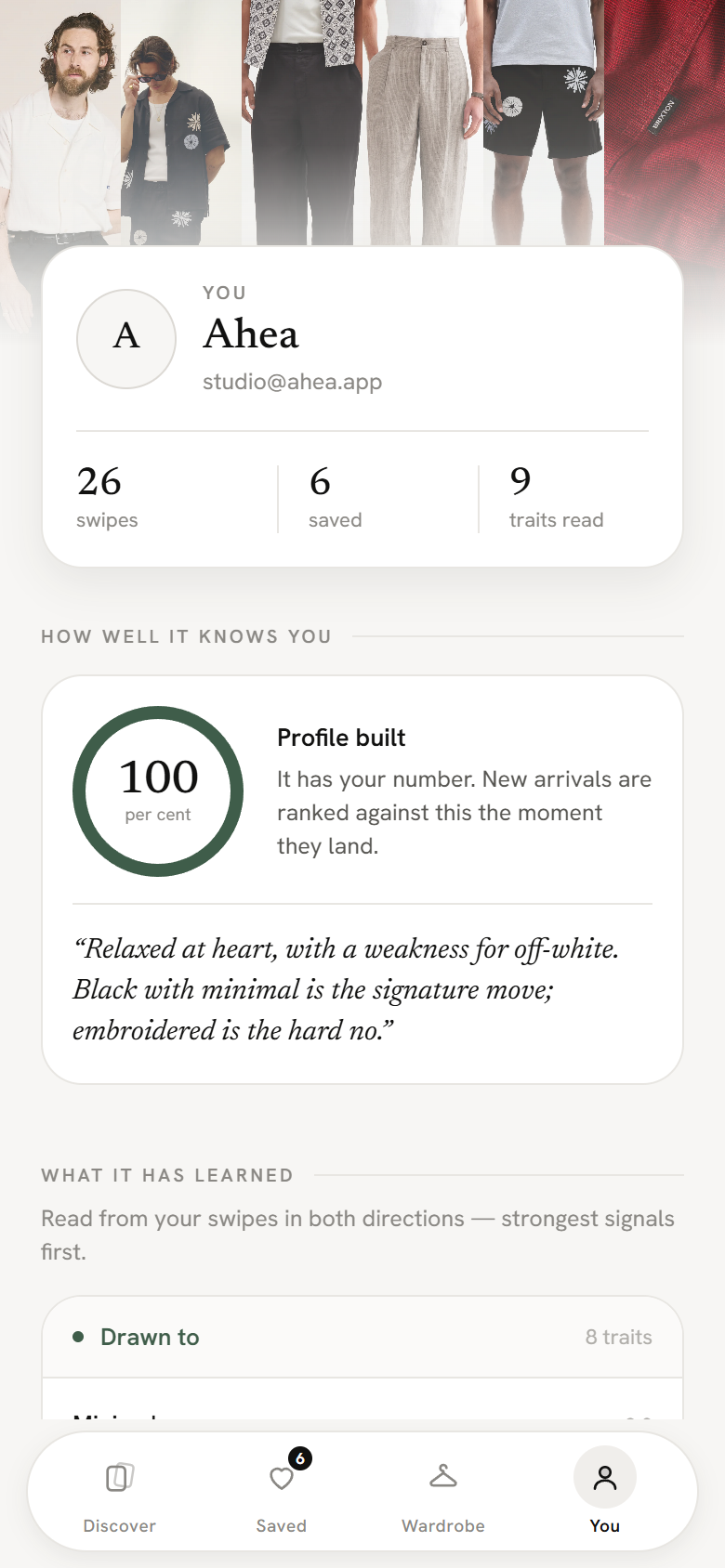
Traits you’re drawn to, traits it’s steering away from, and the combinations it has noticed. Reset any of it whenever you like.
And what you already own
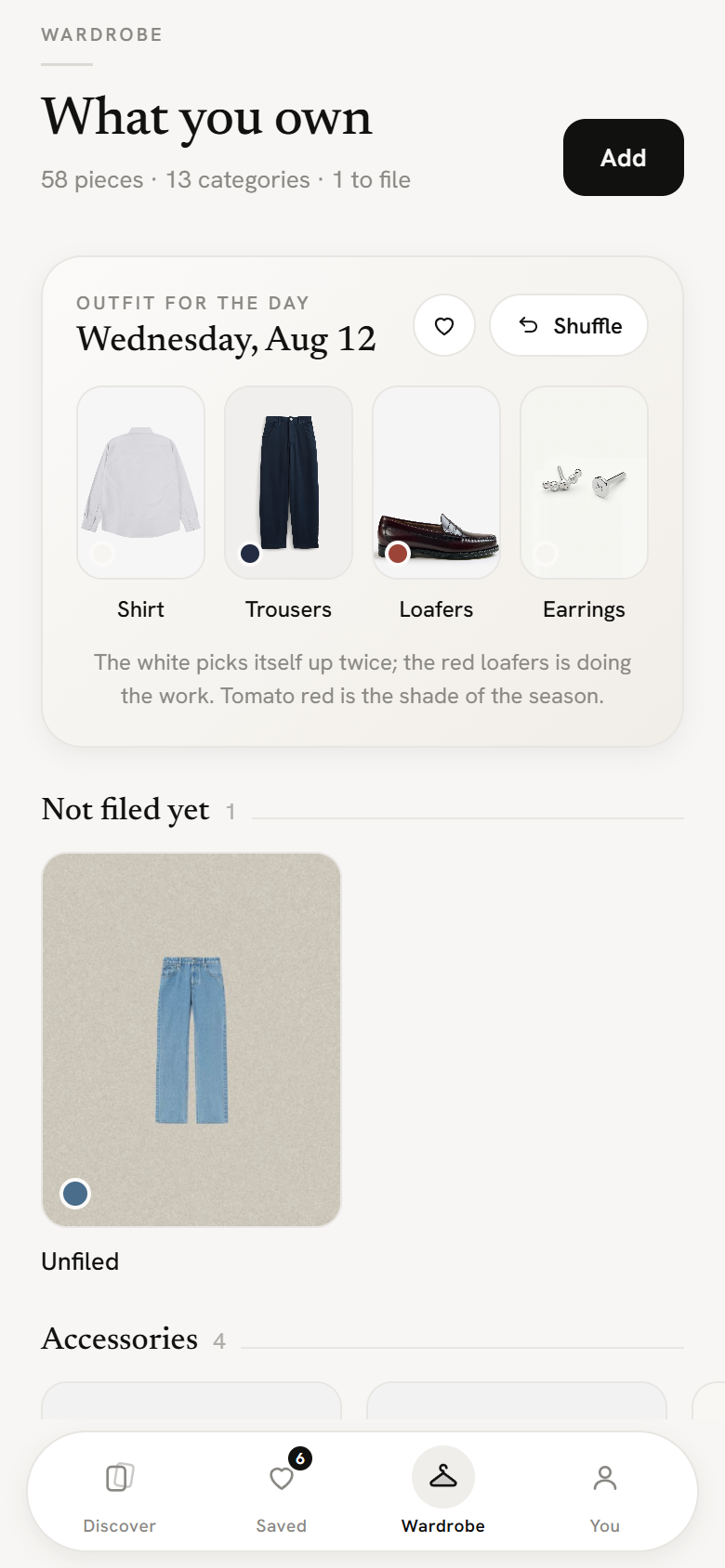
Photograph your own clothes and file them by category. It stays on your phone — never uploaded, never shown to brands — and it is the one thing to check before you buy a fourth black knit.
Screenshots of the live build, not mockups — every screen above is the running app.
Why it stops feeling generic after about twenty swipes.
Recommenders usually count tags. That works until it doesn’t: like "sheer", like "black", and a tag-counter will confidently serve you sheer black — even if sheer black is the one thing you keep passing on.
Your profile stays on your phone. The model is a few hundred numbers in your own storage — there is no server-side profile of you, because there is no server doing the ranking. Deleting the app deletes the model.
Brands do get one thing: a tally against each of their own products — swiped right, swiped left, saved, opened, clicked through. It carries no user id, no device id and no session, so a label can learn that a coat was kept 62% of the time and can never learn that you kept it. The full detail.
Independent labels, chosen on a rule.
Every brand here had to pass the same test: portrait product photography, shot on a model. A square packshot on a white background looks broken on a full-bleed card no matter how good the garment is — so those stores didn’t make it in.


What’s in it — sixteen categories.
A filter, never something the recommender learns on. Style travels across all of them at once.
The traits in ink are the ones the current edit carries most. Rarity is what gives a trait its weight, so the pale ones move your feed hardest.
Two platforms, one of them ready.
We’d rather show you an honest button than a live-looking one that goes nowhere. iOS is genuinely not open yet.
Android
BuildingVersion 1.0.0 · Android 8.0
The build isn’t hosted yet, so this button does nothing on purpose rather than sending you to a dead link. Ask us for it.
iPhone
Not openTestFlight build in review. Leave your email and we’ll write once it’s open.
Prices and stock are a snapshot, refreshed on a schedule — the app tells you how old it is, and every piece links out to the brand for the live figure. Nothing is bought inside Ahea.
Your pieces, in front of people who already like your cut.
Ahea doesn’t rank by budget or bid. A garment surfaces because its style matches what someone has been swiping toward — which means a small label with a distinctive cut competes on equal terms with a house twenty times its size.


The obvious ones.
Does swiping right save the piece?
No, and that’s deliberate. A right swipe is taste signal — it tells the feed "more like this". Saving is a separate button. If liking meant saving, your saved tab would fill with hundreds of things you merely didn’t dislike, which makes it useless for the one job it has.
How do you make money?
Right now, we don’t. There are no ads, no sponsored placements in the deck, and no data sold — ranking is done on your device from your own swipes, so there is nothing to sell. Affiliate referral to the brands is the intended model, and it will never be allowed to reorder the deck.
Where do the products come from?
Public product listings from each brand’s own storefront, refreshed on a schedule. Prices show in the store’s own currency and every piece links to the brand’s page. We hold no stock and take no payment.
Why does the app never show how many pieces are left?
Because a counter turns browsing into a task with an end, and people stop early. There is no "23 left", no deck total, nowhere.
Can I get it wrong and start again?
Yes. Undo takes back the last swipe and subtracts exactly what it added. There’s also a full reset that forgets everything the model learned while keeping your saves and bag.
I’m a brand. What does it cost?
Nothing to list during the current phase. See the partner page for what we need from a listing and what you get back.